
Engagement vs culture — complementary, not identical
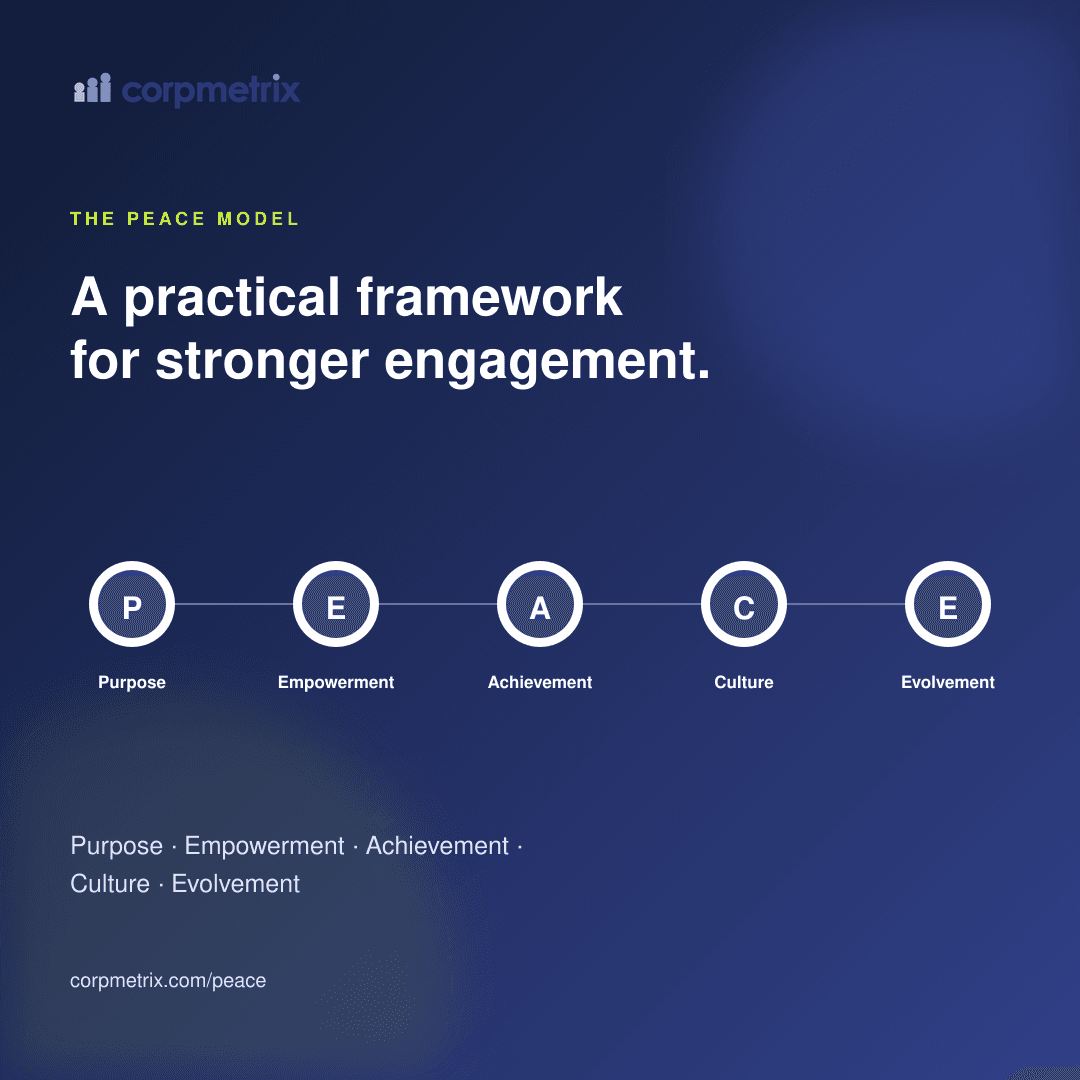
An engagement survey answers: do people have purpose, empowerment, achievement, belonging, and growth right now? A culture diagnostic answers: what shared (or fractured) rules make those scores predictable across units?
Fairness, respect, psychological safety, and shared norms. Culture is the system that makes the other dimensions livable day to day.
Culture is what people do when the policy document is closed.
“Culture is what people do when the policy document is closed.”
When to run a culture diagnostic
Use a deeper culture study after mergers, leadership transitions, ethics events, or when engagement is stuck despite local action plans. During stable years, PEACE Culture items inside the engagement cycle often suffice.
- Post-merger: map colliding norms before forcing a single “values deck.”
- Transformation: find HQ–frontline gaps that strategy decks ignore.
- Trust repair: measure fairness and psychological safety with extra depth.
From friction maps to a change roadmap
Good diagnostics produce friction maps — pockets of strength and misalignment — not a single culture score to advertise. Interventions belong to managers and sponsors: decision rights, recognition systems, meeting norms, and how conflict is handled.
Safety: Psychological safety predicts both innovation climate and regrettable attrition. Gaps: HQ–frontline Culture gaps are often larger than industry gaps. Action: Culture sticks when managers own local norms — not when it stays in communications.
Frequently asked questions
Can PEACE replace a culture diagnostic?
PEACE Culture items give a continuous read. A dedicated diagnostic adds depth for transformation moments. Many organisations use both on different cadences.
How long does a culture diagnostic take?
Typically several weeks of listening plus qualitative layers (focus groups, leader interviews), then a facilitated readout — longer than a standard engagement wave.